
- What Is a Multi-Location Marketing Strategy?
- Why Multi-Location Businesses Struggle to Generate Leads in Every Market
- Step 1: Build a Strong Brand Foundation Before Localizing
- Step 2: Create Location-Specific SEO Assets
- Step 3: Use PPC to Support Priority Markets
- Step 4: Add Paid Social and Programmatic for Market Awareness
- Step 5: Build a Local Content Strategy for Every Market
- Step 6: Create a Reporting System That Shows What Is Working by Market
- A multi-location marketing strategy should not rely on thoughts and premonitions. Each market needs clear reporting so you can see what is driving leads, where performance is growing, and which locations need more support.
- Track the Right KPIs
- Compare Markets Against Each Other
- Use Data to Reallocate Budget
- CAP Case Study: How Multi-Location Marketing Supports Regional Growth
- Common Multi-Location Marketing Mistakes to Avoid
- How to Know Your Multi-Location Marketing Strategy Is Working
- Build a Multi-Location Marketing Strategy That Scales
- FAQs About Multi-Location Marketing Strategy
Growth across multiple markets can create a new level of marketing complexity. A brand may have strong overall awareness, but still struggle to generate consistent leads at the local level when each market has different competitors, search behavior, customer expectations, and sales opportunities.
A strong multi-location marketing strategy helps growing businesses stay consistent as a brand while giving each market the local visibility, messaging, and lead generation support it needs to compete. Instead of treating every location the same, the right strategy creates a scalable system that can be adapted by market, measured by performance, and optimized over time.
At Renaissance Marketing, we have seen this firsthand through our work with Chesterfield Auto Parts, where multi-location visibility, market-specific execution, and coordinated digital marketing helped support growth across competitive local markets.
What Is a Multi-Location Marketing Strategy?
A multi-location marketing strategy is a coordinated plan for promoting a business across multiple geographic markets while balancing brand consistency, local relevance, lead generation, and performance tracking.
For growing companies, this means building a marketing system that can support each individual location or service area without losing the strength of the overall brand. The goal is not just to show up in more places. The goal is to help every market compete, convert, and contribute to business growth.
Multi-Location Marketing vs. Local Marketing
Local marketing typically focuses on one primary location, one target geography, and one set of local competitors. The strategy may include local SEO, Google Business Profile optimization, paid ads, social media, reviews, and website content designed to reach customers in that specific area.
Multi-location marketing requires a more scalable approach. Each location or service area may need its own local SEO strategy, landing page, Google Business Profile, paid media targeting, content, and tracking. At the same time, all of those efforts need to stay aligned with the company’s larger brand, messaging, and growth goals.
That balance is where many businesses struggle. If every market is treated exactly the same, the strategy can feel too generic to perform locally. But if every location operates without a shared system, the brand can become inconsistent and difficult to manage. A strong multi-location marketing strategy solves both problems by creating repeatable systems that can be localized for each market.
For businesses expanding into new regions or managing several locations at once, working with an experienced agency like Renaissance Marketing can help ensure each market gets the attention it needs while the overall strategy remains organized, measurable, and growth-focused.
Multi-Location Marketing vs. Franchise Marketing
Multi-location marketing and franchise marketing are similar, but they are not the same. Franchise marketing often involves separate owners, local operators, franchise rules, and corporate brand standards. The strategy has to balance the larger brand with the needs of the independently managed locations.
Multi-location marketing is broader. It can apply to franchises, but it also includes corporate-owned locations, regional brands, healthcare groups, auto groups, home service companies, dental practices, and businesses expanding into new markets.
The main difference is structure. Franchise marketing often has to account for ownership and compliance requirements, while multi-location marketing focuses on creating repeatable systems for marketing across every geography that the business serves.
Why Multi-Location Businesses Struggle to Generate Leads in Every Market
Generating leads across multiple markets is not as simple as copying the same marketing strategy from one location to the next. Each market has its own competitors, search trends, customer expectations, and level of brand awareness. That is why some locations may consistently bring in leads while others struggle to gain traction.
Inconsistent Local Visibility
One of the most common challenges for multi-location businesses is inconsistent visibility. Some locations may rank well in Google search results, Google Maps, and local listings, while others barely show up at all. As AI-generated recommendations become more common, this visibility gap can become even more important. If a location does not have strong local signals, consistent information, optimized content, and enough authority, it may be left out when customers are searching for nearby options. For businesses that want to better understand this gap, Renaissance Marketing offers a free AI Search Rank Report that shows how one location ranks in AI search compared to three top competitors.
One-Size-Fits-All Messaging
A generic brand message may work at the company level, but it does not always reflect how buyers search, compare, or make decisions in each local market. Customers in one city may care more about convenience, while another market may be more price-sensitive, service-focused, or competitor-driven. Multi-location businesses need messaging that stays true to the overall brand while still speaking directly to the needs of each local audience.
Weak Tracking by Location
Without location-level reporting, it is hard to know what is actually working. A business may know its total lead volume, but not which markets, campaigns, landing pages, or channels are producing qualified opportunities. This can lead to wasted budget, missed growth opportunities, and underperforming locations that do not get the support they need.
Disconnected Marketing Channels
SEO, PPC, paid social, programmatic advertising, email, and website content often operate separately when they should be working together. For multi-location businesses, this can create gaps in the customer journey. A strong strategy connects these channels so they can all reinforce the same market-level goals. Renaissance Marketing specializes in multichannel marketing for multi-location businesses. We ensure that all of your marketing channels are connected and have brand cohesiveness.
Step 1: Build a Strong Brand Foundation Before Localizing
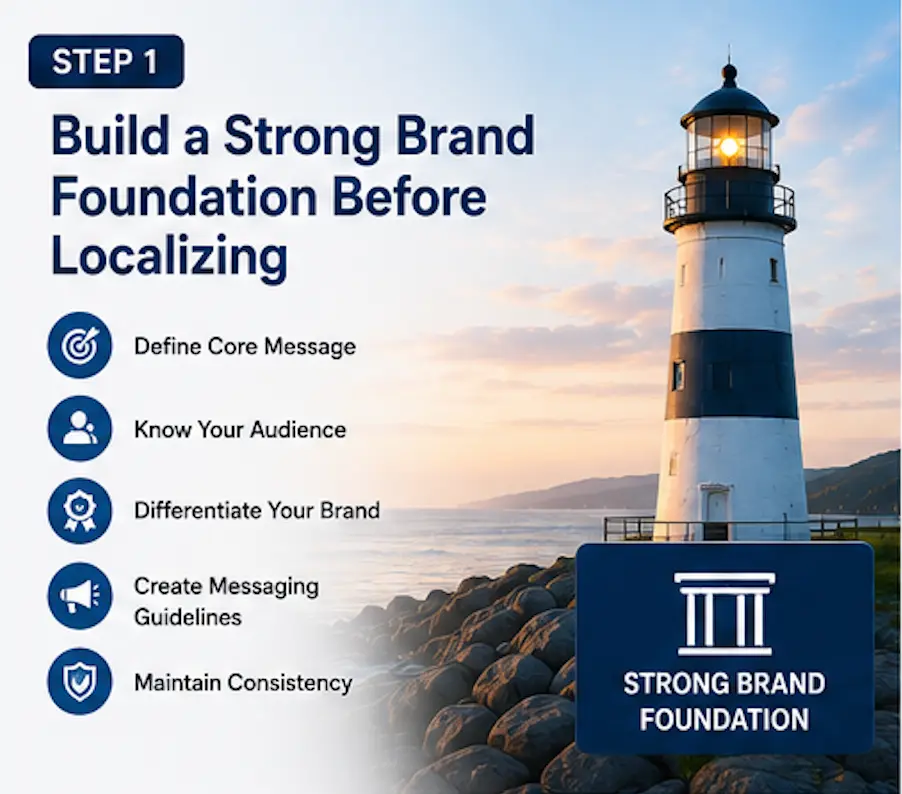
Before a business can market effectively across multiple locations, it needs a clear brand foundation. Localization works best when every market is working from the same core message, value proposition, and growth strategy. Without that foundation, each location may start using different language, offers, visuals, and calls to action, which can weaken the brand and create confusion for potential customers.
Define the Core Brand Message
A strong multi-location marketing strategy starts with a clear understanding of the company’s core message. Before creating location pages, local ads, or market-specific campaigns, businesses need to define who they serve, what problems they solve, what makes them different, and why customers should choose them over local competitors.
Create Market-Level Messaging Guidelines
Once the core message is clear, the next step is to create messaging guidelines that can be adapted by location. These guidelines should include approved value propositions, service descriptions, location modifiers, tone of voice, differentiators, and calls to action. This gives each market enough flexibility to feel local while still keeping the overall brand consistent.
Keep the Brand Consistent While Making Each Market Feel Local
Each location should feel connected to the same company, but not like a copy-and-paste version of every other location. Your brand, services, and overall message should stay consistent, while the local content, offers, and proof points should reflect what matters most in that specific market. This helps customers recognize and trust your brand while still feeling like your business understands their local needs.
Step 2: Create Location-Specific SEO Assets
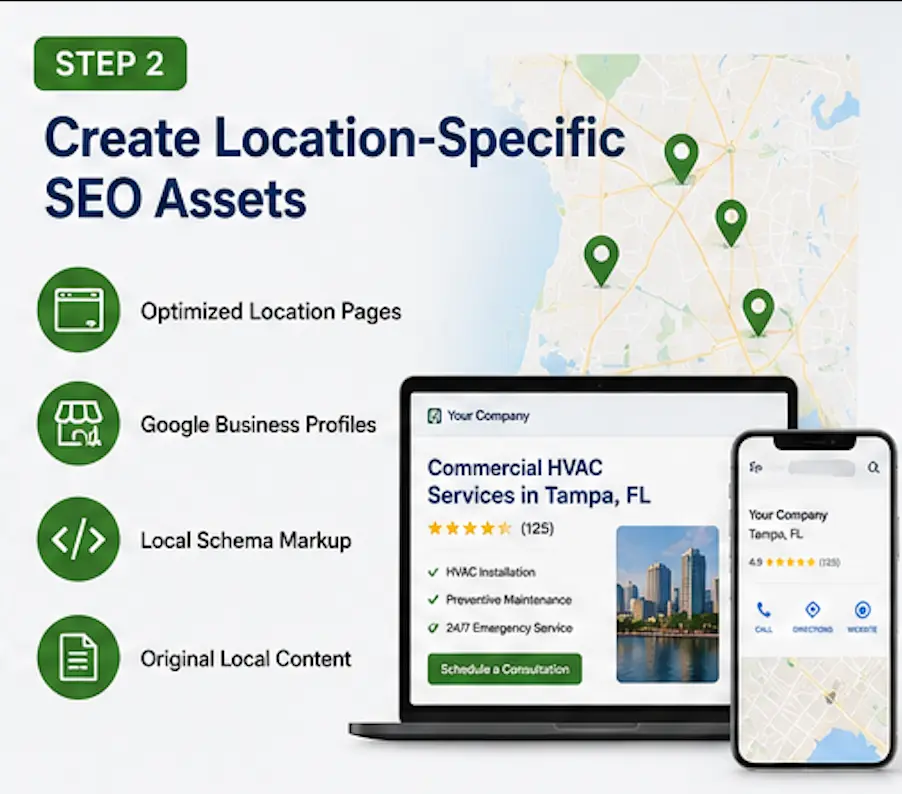
Once the brand foundation is clear, each priority location or service area should have SEO assets that help it show up in local search. For multi-location businesses, this usually starts with optimized location pages, consistent Google Business Profiles, and clean local SEO signals. If you need assistance with creating location-specific SEO assets, enroll in one of Renaissance Marketing’s Local SEO packages.
Build Optimized Location Pages
Each location or service area should have its own page when there is a real local presence or business reason to target that market. These pages should include a localized H1, unique intro copy, services offered in that market, local proof points, reviews or testimonials, NAP information when applicable, service area details, internal links, and a clear call to action.
The goal is to make each page useful for both search engines and potential customers. A strong location page should answer what you offer, where you offer it, why customers should trust you, and what they should do next.
Optimize Google Business Profiles
Google Business Profiles should also be consistent and complete across every location. Categories, services, descriptions, photos, reviews, business information, and landing page links should all support the same local SEO strategy. This helps each location build trust and improve visibility in Google Maps and local search results.
Use Local Schema Markup
Local schema markup can help search engines better understand your business, locations, services, and content. Multi-location businesses should consider Local Business schema, Organization schema, FAQ schema, and service-specific schema where appropriate.
Avoid Duplicate Location Content
Creating location pages does not mean copying the same page and swapping out the city name. Each page should provide unique and helpful content, which will give each location a better chance to rank and convert.
Step 3: Use PPC to Support Priority Markets
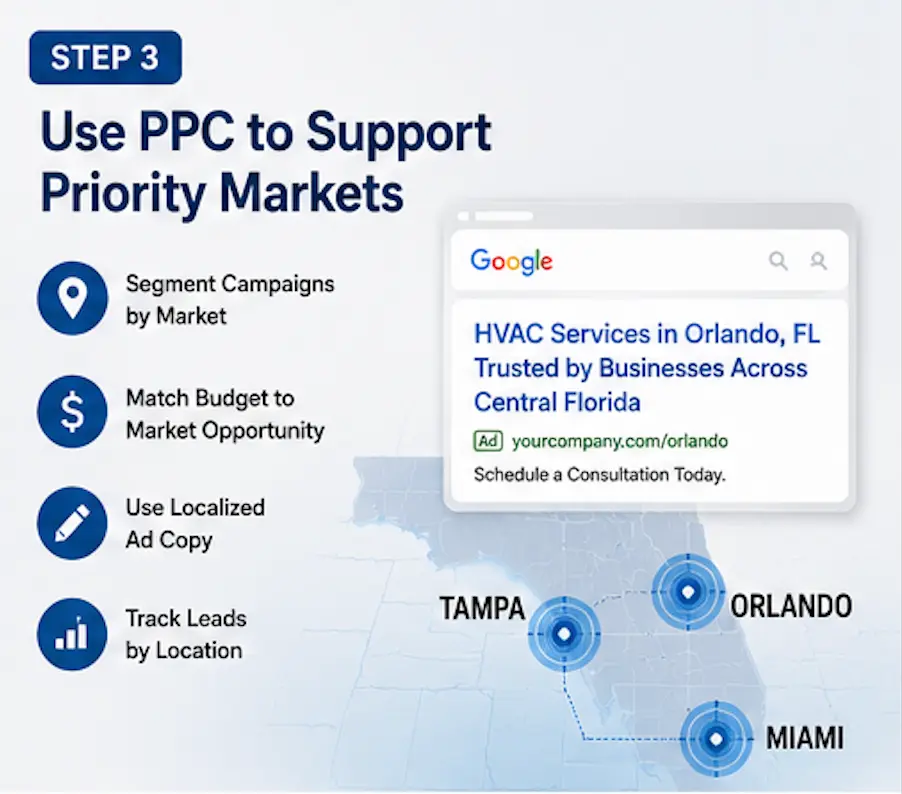
SEO helps build long-term visibility, but PPC can help generate leads faster in the markets that matter most. For multi-location businesses, paid search is especially useful when entering a new market, supporting an underperforming location, or increasing visibility in a highly competitive area.
Segment Campaigns by Market
PPC campaigns should be organized by each market whenever possible. Depending on the budget and size of each location, this may mean creating separate campaigns for each priority market or using structured ad groups by location. This makes it easier to control budget, customize ad copy, and measure performance by market.
Match Budget to Market Opportunity
Not every market needs the same budget. Larger or more competitive markets may require more spend to generate better visibility and lead volume, while smaller markets may perform better with tighter targeting, more specific keywords, and a focused budget. The goal is to invest based on opportunity, competition, and performance, rather than splitting the budget evenly across every location. If you need assistance with managing multi-location PPC, we’re here to help!
Use Localized Ad Copy
Ad copy should make it clear that your business serves the customer’s specific area. Simple location-based messaging can make ads feel more relevant and improve the quality of traffic. Examples include:
- “Serving Tampa and Surrounding Areas”
- “Schedule a Consultation in Tampa Bay”
- “Trusted by Businesses Across Florida”
Track Leads by Location
PPC only works well when you know which markets are producing results. It’s very important to use call tracking, form tracking, CRM source tracking, UTM structure, and location-level conversion reporting in order to see which campaigns, keywords, and markets are driving qualified leads. This allows you to shift budget toward what is working and make smarter decisions for each location.
Step 4: Add Paid Social and Programmatic for Market Awareness
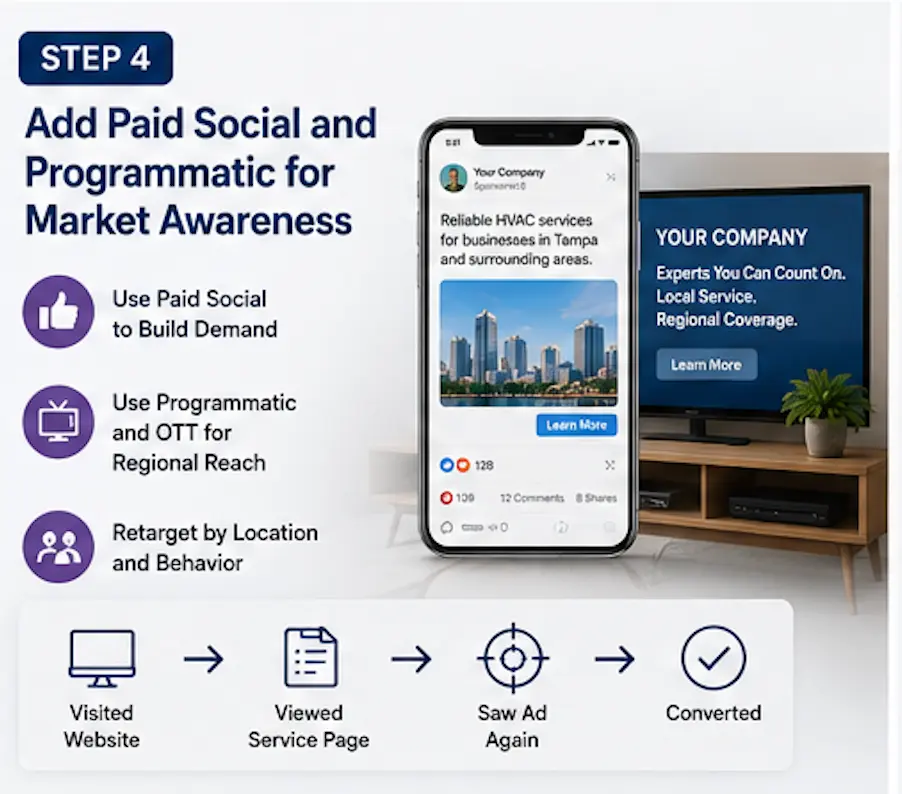
Not every lead starts with a Google search. Most of the time, a potential customer will need to see your brand several times before they are ready to call, click, or submit a form. Paid social, programmatic display, and OTT advertising can help build awareness in the markets where your business wants to grow.
Use Paid Social to Build Demand
Paid social can help introduce your brand in new or underperforming markets. It’s another useful channel that can reach other demographics depending on which social platforms you use. It is useful for promoting offers, highlighting services, sharing proof points, supporting seasonal campaigns, and retargeting people who have already visited your website. Paid social campaigns are great for branding and keep your business visible before customers are actively searching. At Renaissance Marketing, we offer paid social campaigns that assist in brand awareness and lead generation.
Use Programmatic and OTT for Regional Reach
Programmatic display and OTT advertising can help businesses reach targeted audiences across specific regions. These channels are especially helpful when expanding into a new market or trying to build brand recognition beyond search ads. Though this marketing channel is more of an investment, when paired with PPC and retargeting, they all work together to support brand awareness and lead generation.
Retarget by Location and Behavior
Retargeting helps bring interested users back after they have interacted with your brand. On average, it takes a user eight touchpoints before they convert. This is exactly why multi-location businesses should use retargeting. For multi-location businesses, it’s also important to retarget users based on the pages they viewed, the market they showed interest in, the services they explored, and where they are in the buying journey. This helps keep follow-up messaging relevant and tied to each local market.
Step 5: Build a Local Content Strategy for Every Market
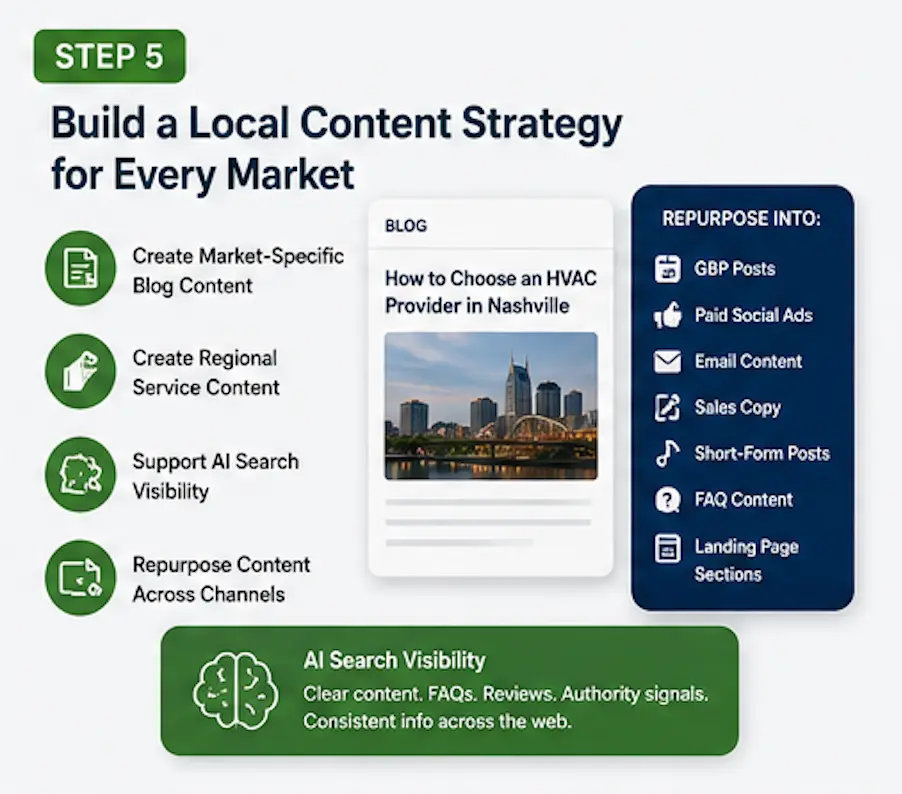
As a multi-location business, you should build a content strategy for each local market. Local content helps to build each location’s authority, visibility, and trust. It also helps support multi-location SEO by targeting location-specific searches, it helps AI/LLMs to better understand your business, and gives your potential customers useful information before they contact you.
Create Market-Specific Blog Content
Market-specific blogs will help you provide answers to what your customers are already asking in each location. Topics for market-specific content can target local search while also showing that your business understands the needs of each market.
Examples:
- “How to Choose a Marketing Provider in Tampa”
- “What Tampa Bay Customers Should Know Before Hiring a Tree Cutting Company”
- “Why Florida Businesses Are Investing in Google Ads”
Create Regional Service Content
For businesses that provide services in multiple cities, it may be useful to create regional service content that connects each market together. Regional content can include pages or blogs focused on service areas, regional challenges, seasonal demand, or location-specific customer needs.
Support AI Search Visibility
As more customers use AI and LLMs to compare service providers, your content needs to clearly explain who you serve, what you offer, where you operate, and why your business is a trusted choice. Strong service pages, structured content, FAQs, reviews, authority signals, and consistent business information across the web all help support visibility in AI-generated recommendations. If you need assistance with AI SEO, Renaissance Marketing offers this service to all clients who have completed 6+ months of local or national SEO. Click here to learn more or to book your free AI visibility check.
Repurpose Content Across Channels
Repurposing content can multiply your marketing efforts. One market-focused blog can do more than support organic search. You can repurpose local content to become GBP posts, paid social ads, email content, short-form social posts, FAQ content, and landing pages.
Step 6: Create a Reporting System That Shows What Is Working by Market
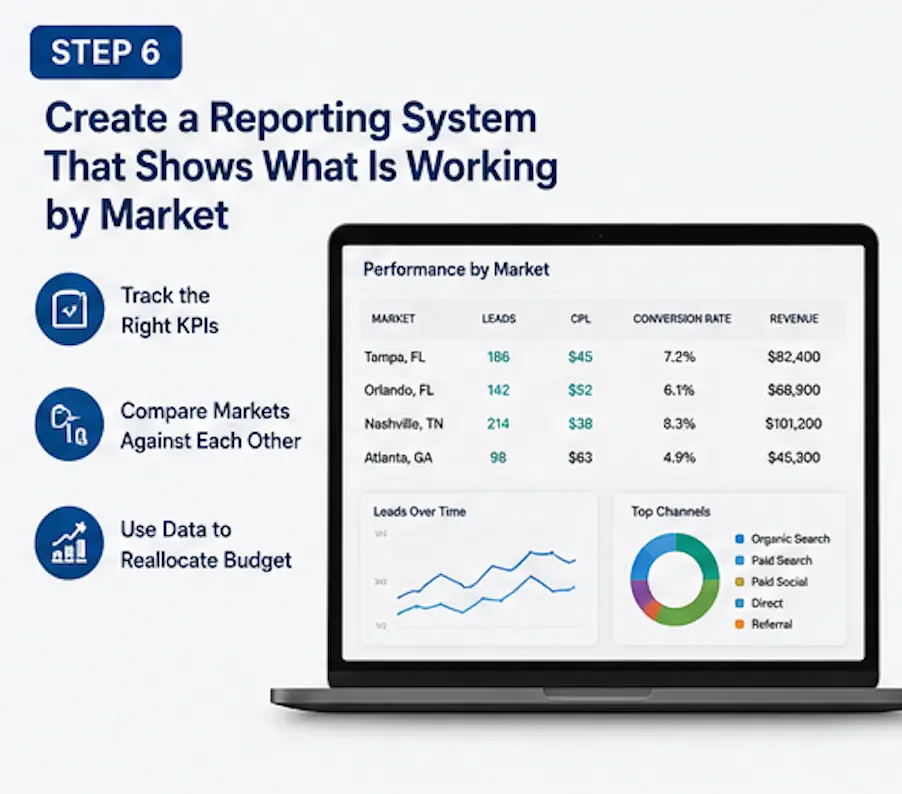
A multi-location marketing strategy should not rely on thoughts and premonitions. Each market needs clear reporting so you can see what is driving leads, where performance is growing, and which locations need more support.
Track the Right KPIs
The right reporting system should show performance by market, not just overall results. Important KPIs include organic traffic by location page, keyword rankings by market, each location’s Google Business Profile calls and direction clicks, form submissions by market, paid search conversions, cost per lead, landing page conversion rate, lead quality by source, and revenue or opportunity value by market when available.
Compare Markets Against Each Other
Multi-location reporting should make it easy to see which markets are growing, which are underperforming, and which need more attention. One market may need more SEO content, another may need stronger paid media support, and another may need conversion rate optimization to turn more traffic into leads.
Use Data to Reallocate Budget
Budgets should shift based on opportunity, not your assumptions. When reporting shows which markets and channels are producing qualified leads, businesses can move budget toward what is working and reduce spend where performance is weaker. This helps each location make smarter marketing decisions and gives the overall strategy a stronger return.
CAP Case Study: How Multi-Location Marketing Supports Regional Growth
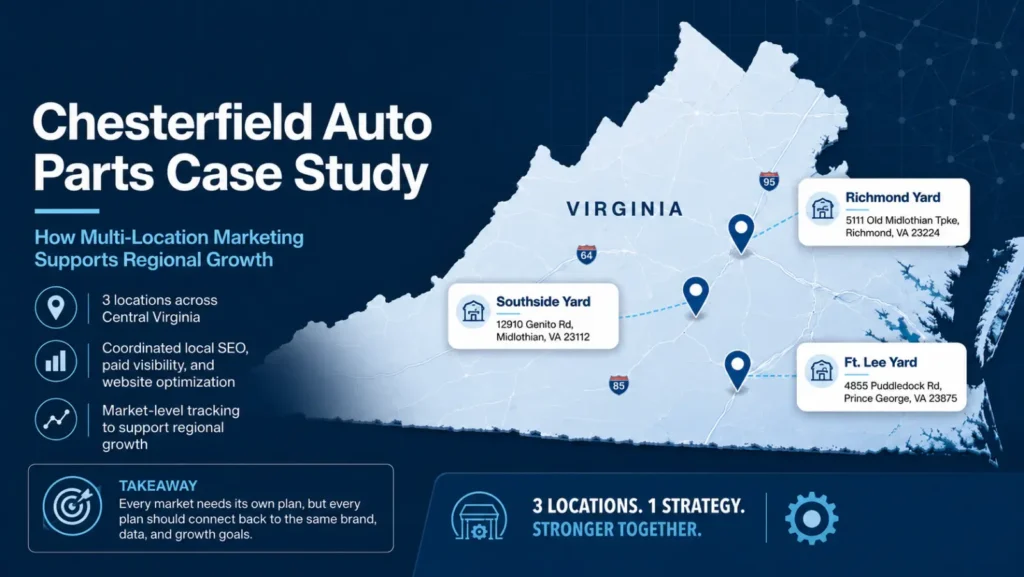
Chesterfield Auto Parts is a strong example of how multi-location marketing can support regional growth without making every market feel exactly the same. For businesses serving multiple areas, the goal is not just to be visible overall. The goal is to make sure each priority market has the right mix of local visibility, messaging, and lead generation support.
The Challenge
CAP needed marketing support that could strengthen visibility and lead generation across multiple service areas while keeping the brand consistent. Like many regional businesses, they needed to reach customers in different markets without creating a disconnected or confusing brand experience.
The Strategy
Renaissance Marketing supported CAP with a coordinated strategy that included local SEO, content, paid visibility, website optimization, and market-level tracking. Instead of relying on one channel, the strategy focused on helping each market become more visible while making sure the overall brand stayed consistent.
The Lesson
The biggest lesson from CAP is that multi-location marketing works best when every market has its own plan, but every plan connects back to the same brand, data, and growth goals. Each location or service area may need different keywords, content, ads, and budget support, but the strategy should still work together as one system.
What Other Businesses Can Learn from CAP
Businesses with multiple locations or service areas should avoid treating every market the same. A stronger approach is to build repeatable systems, localize content and campaigns, measure performance by market, and use multiple channels together instead of relying on one tactic. This helps each market get the support it needs while giving the business a clearer path for regional growth.
Common Multi-Location Marketing Mistakes to Avoid
Even with a strong strategy, multi-location businesses can lose leads if the foundation is not set up correctly. Avoiding these common mistakes can help each market perform better and make the overall strategy easier to manage.
Using the Same Landing Page for Every Market
One generic landing page is rarely enough for a multi-location business. When every location sends traffic to the same page, the content may feel too broad and less relevant to local customers, which can hurt both rankings and conversions. It’s important to have a landing page for each market.
Letting Google Business Profiles Go Unmanaged
Google Business Profiles are often one of the first places customers interact with a local business. If profiles are incomplete, outdated, inconsistent, or missing reviews and photos, they can weaken trust and reduce visibility in local search results. Each profile should be accurate, active, and aligned with the larger local SEO strategy. GBP optimization is included in our SEO packages for all multi-location clients.
Running Paid Ads Without Location-Level Tracking
Paid ads can drive leads quickly, but only if you know where those leads are coming from. Without location-level tracking, it’s hard to see which markets, campaigns, keywords, and landing pages are producing results. This can lead to wasted spend and missed opportunities to invest more in the markets that are performing well.
Expanding Before the Marketing Infrastructure Is Ready
A business may open or target new markets before the marketing system is prepared to support growth. Without location pages, tracking, content, campaigns, reporting, and clear messaging in place, new markets can struggle to gain traction. Strong infrastructure gives each market a better chance to build visibility, generate leads, and grow with purpose.
How to Know Your Multi-Location Marketing Strategy Is Working
A strong multi-location marketing strategy should make performance clearer, not more confusing. When the right systems are in place, you should be able to see which markets are growing, which channels are driving leads, and where to focus next.
Each Market Has a Clear Role
Not every market should be treated the same. Some markets may be growth markets where the goal is to increase visibility and lead volume. Others may be maintenance markets where the focus is protecting rankings, brand presence, and steady lead flow. Expansion markets may need more awareness, content, and paid media support before they begin producing consistent results.
Leads Are Increasing Across More Than One Channel
A healthy strategy does not depend on one channel alone. Organic search, paid search, paid social, referral traffic, direct traffic, retargeting, and brand awareness should all work together to support lead generation.
When Renaissance Marketing works with multi-location brands, we often recommend a Renaissance 360 package because it combines PPC, SEO, and Paid Social into one coordinated strategy. Together, these channels help businesses build visibility, reach customers at different stages of the buying journey, and generate stronger lead opportunities across priority markets.
Reporting Shows What to Do Next
The best reporting does more than show numbers. It should help explain what is working, what needs improvement, and where the next opportunity is. If one market is getting traffic but not leads, it may need better conversion rate optimization. If another market has strong paid performance but weak organic visibility, it may need more SEO support. A working strategy gives business owners the insight they need in order to make smarter growth decisions.
Build a Multi-Location Marketing Strategy That Scales
A successful multi-location marketing strategy is not just about ranking in more cities or running ads in more zip codes. It is about building a scalable system that helps every market compete, convert, and grow. At Renaissance Marketing, we work with many multi-location businesses by managing multiple marketing channels: national and local SEO, AIO/GEO visibility, pay-per-click, paid social, programmatic advertising, web design, and more, with a cohesive strategy that results in achieving our monthly KPIs.
Ready to Grow Leads Across Every Market?
If your business is expanding into new markets or trying to improve performance across multiple locations, Renaissance Marketing can help you build a strategy that connects local visibility, paid media, content, and reporting into one scalable growth system. Click below to meet a member of our team and schedule your multi-location marketing strategy call.
Schedule a Multi-Location Marketing Strategy Call
FAQs About Multi-Location Marketing Strategy
What is a multi-location marketing strategy?
A multi-location marketing strategy is a coordinated plan for promoting a business across multiple markets while keeping the brand consistent and adapting campaigns, SEO, content, and messaging for each local audience.
Why is local SEO important for multi-location businesses?
Local SEO helps each location or service area appear in relevant search results, map listings, and local discovery moments when customers are actively looking for services nearby.
Should every location have its own landing page?
In most cases, yes. Each important location or service area should have a unique, optimized page that reflects that market’s services, audience, proof points, and calls to action.
How do you track multi-location marketing performance?
Track performance by location using analytics, call tracking, form tracking, UTM parameters, CRM data, GBP insights, keyword rankings, and paid media conversion data.
What channels work best for multi-location marketing?
The best mix usually includes local SEO, PPC, paid social, retargeting, content marketing, GBP optimization, programmatic advertising, and conversion-focused website improvements.