
- Why Marketing Is Non-Negotiable for Home Health Agencies Today
- Build Your Marketing Foundation First
- Build a Website That Converts (Not Just One That Exists)
- Local SEO: How Families Find You When It Matters Most
- Referral Marketing: Your Highest-Value Growth Channel
- Content Marketing and Thought Leadership
- Social Media Marketing for Home Health Agencies
- Paid Digital Advertising (PPC): Generating Immediate Leads
- Online Reputation Management: Your Most Powerful Marketing Asset
- Community and Relationship Marketing
- Caregiver Recruitment as a Marketing Strategy
- AI Search Optimization: Preparing for the Future of Home Health Marketing
- Measuring What Matters: KPIs and Marketing ROI for Home Health Agencies
- Marketing Budget Allocation by Home Health Agency Size
- Find The Right Marketing Partner for Home Health Agencies
The home health industry is growing fast, and so is competition for the clients and referral sources that sustain it. The best marketing strategy for home health agencies isn’t a single tactic, but a coordinated system of digital visibility, referral relationship management, reputation building, and consistent measurement.
This guide is written for owners and marketing managers who need a clear, actionable home health agency marketing plan that reflects how families search for care and how referral sources evaluate agencies today.
Why Marketing Is Non-Negotiable for Home Health Agencies Today
Families searching for in-home care turn to Google first. Referral sources (hospital discharge planners, physicians, elder law attorneys) evaluate agencies online before making recommendations. Without a strong, consistent marketing presence, your agency is invisible at the moments that matter most.
Marketing in this industry isn’t about aggressive promotion. It’s about being credible, accessible, and visible when someone is ready to make a difficult decision.
Build Your Marketing Foundation First

No campaign or ad spend will outperform a weak foundation. Before executing tactics, get the fundamentals right.
Define Your Unique Value Proposition (UVP)
What makes your agency the right choice? Specialized dementia care, faster intake, stronger caregiver retention, or multi-county coverage — whatever distinguishes you needs to be clearly and specifically stated. Vague positioning produces forgettable marketing.
Know Your Top Three Client Personas
Most home health agencies serve at least three distinct audiences: the adult child managing a parent’s care remotely, the senior making their own care decisions, and the referral source recommending your services professionally. Each has different concerns and a different timeline. Your messaging should speak to all three.
Establish Your Brand Identity
Brand consistency signals professionalism before anyone speaks to your team. A defined visual identity, a clear tagline, and a consistent tone of voice build the kind of trust that high-stakes care decisions demand.
Build a Website That Converts (Not Just One That Exists)
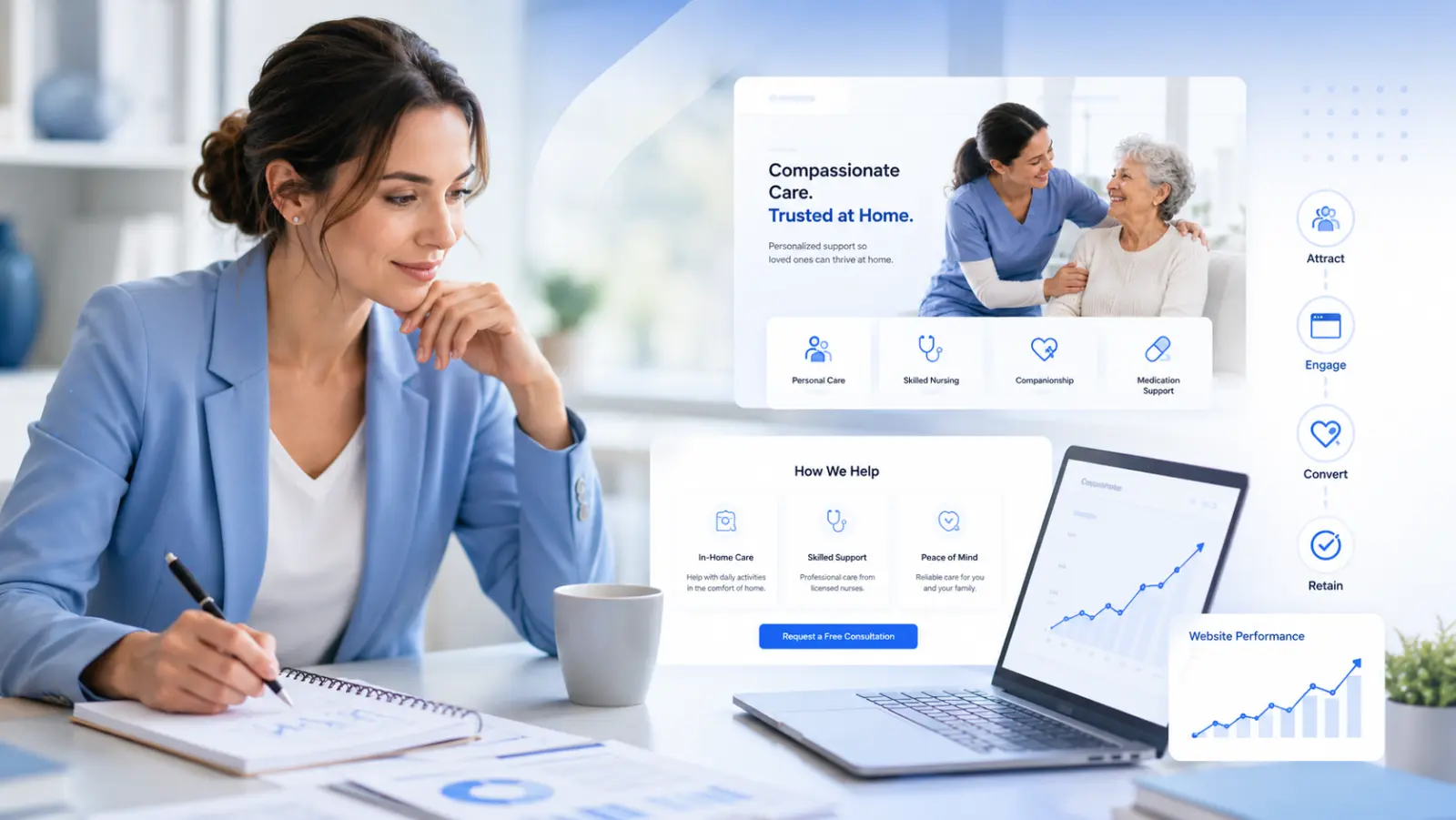
Your website is the hub of every marketing channel you invest in. A slow, generic, or outdated site undermines every dollar spent elsewhere. A high-performing home health website loads quickly on mobile, clearly states services and service areas, features client testimonials, and makes it simple to request care or ask a question. Renaissance Marketing’s web design services are built around conversion, not aesthetics alone.
Local SEO: How Families Find You When It Matters Most
When someone searches “home health agency near me” or “in-home care in Tampa, FL,” local SEO determines whether your agency appears. This is among the highest-return investments available to home health agencies, and our local SEO services are built specifically for businesses competing in defined geographic markets.
Optimize Your Google Business Profile
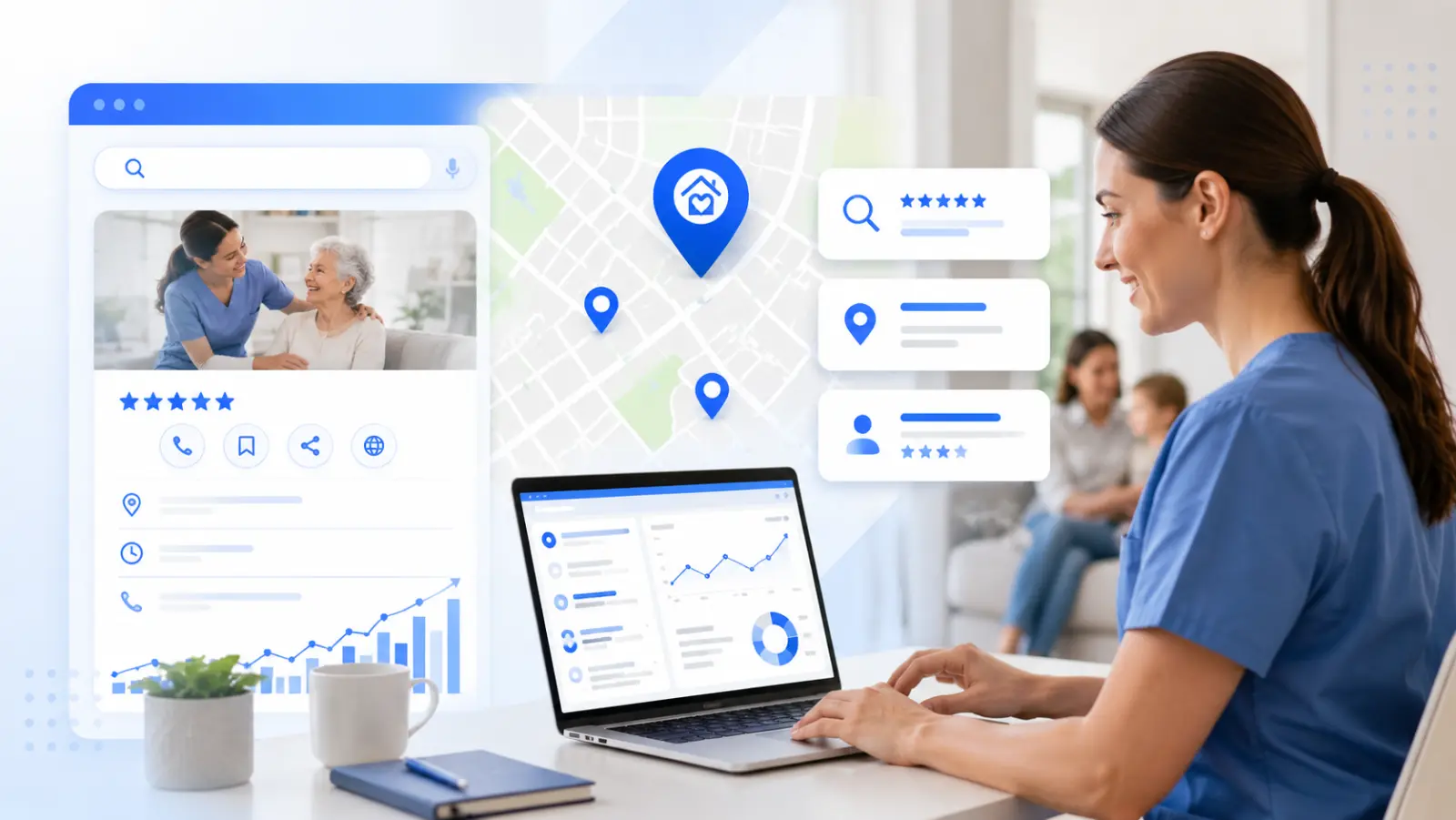
Your Google Business Profile is often the first impression a family has of your agency. Keep it fully populated with service areas, hours, photos, and a steady stream of reviews. Agencies that actively manage their profiles rank higher in local results. See our local SEO guide for Google Business Profile for a step-by-step approach.
Build Location and Service Pages
If you serve multiple counties or cities, each market deserves its own dedicated page. Specialized services, like Alzheimer’s care, post-surgical recovery, or pediatric home health, should also have individual pages targeting those specific search terms.
Local Directory Listings and Lead Sites
Platforms like Caring.com, A Place for Mom, and Home Care Pulse drive real inquiry volume. Accurate, consistent information across directories protects both your credibility and your search rankings.
Content and Blog Strategy for SEO Authority
Publishing well-optimized content builds search authority over time. Topics like “how to choose a home health agency,” “signs a parent needs in-home care,” or “what Medicare covers for home health” attract families early in the research process, before they’ve chosen a provider.
Referral Marketing: Your Highest-Value Growth Channel
For most home health agencies, referrals generate the majority of new business. Building and maintaining those relationships is central to any effective home health agency marketing plan.
Map Your Referral Sources
Start with a clear picture of where referrals currently originate. Hospitals, skilled nursing facilities, primary care physicians, elder law attorneys, geriatric care managers, and senior living communities each represent potential channels. Prioritize outreach based on volume potential.
Build and Nurture Referral Relationships
Consistent, value-driven outreach sustains referral relationships over time. Lunch-and-learns, resources for discharge planners, and regular check-ins position your agency as a reliable care partner rather than another vendor competing for attention.
Prove Your Value to Referral Sources
Referral sources stake their own professional reputation on the agencies they recommend. Outcome data, rehospitalization rates, client satisfaction scores, and caregiver consistency are the proof points that build lasting confidence.
Client Referral Program
Existing clients and their families are an often-overlooked referral source. A structured program, whether recognition, a meaningful gesture, or a community donation, can generate qualified leads at very low cost.
Content Marketing and Thought Leadership
Content builds trust long before a family calls your agency. Done consistently, it also drives organic search traffic and positions your organization as the most credible option in your market.
Blog Content Strategy
Focus on questions families are already asking: care planning, navigating insurance, what to expect from in-home care, how to approach a difficult conversation about accepting help. Practical, empathetic content converts readers into inquiries.
Video Marketing
Short videos introducing your care team, explaining your intake process, or sharing client stories create an emotional connection that text alone cannot. They perform well on social platforms and embedded within service pages.
Email Marketing
A regular newsletter keeps your agency top of mind with referral sources, past clients, and families in the research phase. Sharing helpful resources and community involvement keeps you relevant between referral opportunities.
Downloadable Resources as Lead Magnets
Guides like “The Family Caregiver’s Checklist” or “Questions to Ask Before Choosing a Home Health Agency” attract families actively evaluating options (and capture contact information that can be used for a timely follow-up).
Social Media Marketing for Home Health Agencies
Social media rarely closes care decisions on its own, but it plays a meaningful role in reputation, community presence, and caregiver recruitment. Our social media marketing services help agencies develop channel strategies that support real business goals.
Choose the Right Platforms
Facebook remains the strongest platform for reaching adult children and seniors. LinkedIn supports referral source outreach and professional visibility. Instagram is effective for caregiver recruitment and culture building.
Content Types That Work
Team spotlights, caregiver appreciation posts, care tips, community involvement, and client stories (with appropriate permissions) consistently generate engagement. Overly promotional content performs poorly and erodes the trust you’re trying to build.
Paid Social Advertising
Targeted campaigns on Facebook can reach families within specific zip codes who match care-seeking demographics. Paid social advertising performs best when paired with a strong landing page and a clear, specific call to action.
Paid Digital Advertising (PPC): Generating Immediate Leads
When your agency needs leads right now, paid search delivers. Among available home care marketing ideas, PPC offers the most immediate and measurable return.
Google Ads for Home Health
Search campaigns targeting terms like “home health agency in Richmond” or “in-home care for seniors” capture families at the highest point of intent. Google Local Services Ads, which appear at the very top of results and display your star rating directly, are particularly effective for home health agencies. Learn more about Google Local Services Ads.
Managing Budget and ROI
Set geographic parameters carefully, use negative keywords to eliminate irrelevant clicks, and connect campaigns directly to inquiry tracking. PPC without conversion data is expensive guesswork.
Online Reputation Management: Your Most Powerful Marketing Asset
Reviews on Google, Caring.com, and similar platforms directly influence both family decisions and referral source confidence. Actively request reviews from satisfied families, respond to all feedback promptly, and treat reputation management as an operational priority instead of a quarterly initiative.
Community and Relationship Marketing
Sponsoring local senior events, participating in health fairs, partnering with faith communities, and maintaining visibility in senior centers all keep your agency connected to the people it serves. These touchpoints reinforce brand trust and often produce referrals that paid advertising cannot generate.
Caregiver Recruitment as a Marketing Strategy
Your caregivers are your brand. Quality caregiver recruitment and retention is inseparable from your marketing strategy, because client satisfaction, reviews, and referral source confidence all depend on care delivery. Employer branding, thoughtful job advertising, and a workplace culture worth talking about are marketing investments with direct revenue returns.
AI Search Optimization: Preparing for the Future of Home Health Marketing
AI-powered tools like ChatGPT, Perplexity, and Google’s AI Overviews are increasingly shaping how families research care options. Agencies with strong content depth, authoritative backlinks, and well-structured information are more likely to surface in these AI-generated responses. This is a rapidly emerging channel, but building toward it now creates a compounding advantage. For a deeper look, explore our guide on generative engine optimization.
Measuring What Matters: KPIs and Marketing ROI for Home Health Agencies

A marketing plan without measurement is a hypothesis. Consistent tracking ensures your budget is working and reveals what needs adjusting before problems compound.
Key Metrics to Track
- Inquiry volume by channel (organic, paid, referral, social)
- Cost per lead by campaign
- Website conversion rate
- Google Business Profile views and call volume
- Review count and average rating
- Referral source activity and case volume
Tools for Tracking
Google Analytics 4, Google Search Console, and your Google Business Profile dashboard cover the essentials. A CRM integrated with your intake process connects marketing activity to actual admissions, giving you a true picture of return on investment.
Marketing Budget Allocation by Home Health Agency Size
There is no universal budget formula, but benchmarks help frame the conversation:
- Smaller agencies (under $1M in revenue): allocate 8–12% of revenue, prioritizing local SEO, Google Business Profile management, and referral development.
- Mid-size agencies ($1M–$5M): 6–10% of revenue, expanding into paid search, structured content marketing, and more formal referral programs.
- Larger or multi-location agencies ($5M+): 5–8% of revenue, with investment in brand development, advanced digital advertising, and dedicated marketing staff or agency partnerships.
Regardless of size, the ratio of digital to traditional spend should be weighted heavily toward digital. That’s where your prospective clients are searching.
Find The Right Marketing Partner for Home Health Agencies
Executing the best marketing strategy for home health agencies requires consistent implementation, ongoing optimization, and expertise across multiple channels simultaneously. Most agencies don’t have the internal bandwidth to manage all of it effectively.
Renaissance Marketing works with regional and multi-location home health agencies to build marketing systems that generate qualified inquiries, strengthen referral relationships, and support predictable growth. For a broader look at what a full-service digital marketing partnership looks like, explore our complete services. When you’re ready to move from reactive marketing to a strategy built for scale, let’s talk.